
Powell County Arrest Report Sources
None of the local agencies runs a 72-hour or weekly booking blotter. The sheriff, the jail, Stanton Police, and Clay City Police all lack one. The local paper comes closest. Its Powell County Patriot Jail Report category carries dated posts. Recent entries include a report through mid-February 2026 and a January monthly report. That category is a news archive. It is not a county-operated feed. Its posting cadence and underlying data source go unlisted. The Patriot launched in 2023 and ended print publication before moving online in 2026. That history explains why its pages read as a publication record. It says nothing about PCDC's retention of booking material. It does not say how fast an arrest appears in its pages. It also skips whether each report carries a photo.
Read Powell Arrest Reports Carefully
Start with the agency that made the arrest. Work from the dated publication back to the office that created the record, especially on a multi-day search. That habit keeps stale items from reading as live custody.
- Start with the Patriot category or a dated county archive and record the post date, reported arrest date, name spelling, and agency label.
- Compare the agency label with the event. Powell sheriff, PCDC, Stanton Police, Clay City Police, Kentucky State Police, and outside agencies may all appear in county-labelled results.
- Check the official PCDC resident directory only for current residence or custody. A missing result can reflect release, transfer, lag, or a name mismatch.
- Contact the named agency or use the PCDC FOIA form for the booking record. Ask for a defined date range and record type.
- Use the Powell County court record for arraignment and disposition. A news post and a booking page do not finish the case history.
For a fresh arrest, the Arrested Today page fits better. This report page covers a wider span. Use it for catch-up research and for names that have rolled off a current resident directory.
Powell Arrest Report Fields
Every publisher picks its own fields. Kentucky's daily-arrest-list schedule describes booking-derived items an agency may keep, while commercial archives show their own selections. Rows below differ by report.
| Field | Meaning and limit |
|---|---|
| Name | A lookup key that still requires identity confirmation. |
| Arrest or booking date | The reported event date, which can differ from publication time. |
| Agency | The named arresting or booking body and the best records contact. |
| Charge | An charge recorded at booking, not the court's final outcome. |
| Bond | A reported release condition that should be confirmed with jail or court. |
| Photograph | An intake image may exist, but PCDC has not promised public web display. |
| Custody location | A time-sensitive fact that a historical page may no longer reflect. |
Descriptions and charge text often get copied between sites. They can be wrong, incomplete, or stale. Confirm a person through more than a name, and never treat an archived booking photo as proof of current custody.
Patriot Jail Report Pattern
The Patriot gives the clearest Powell-specific news trail, yet promises no daily updates. The source view shows the dated Jail Report archive.
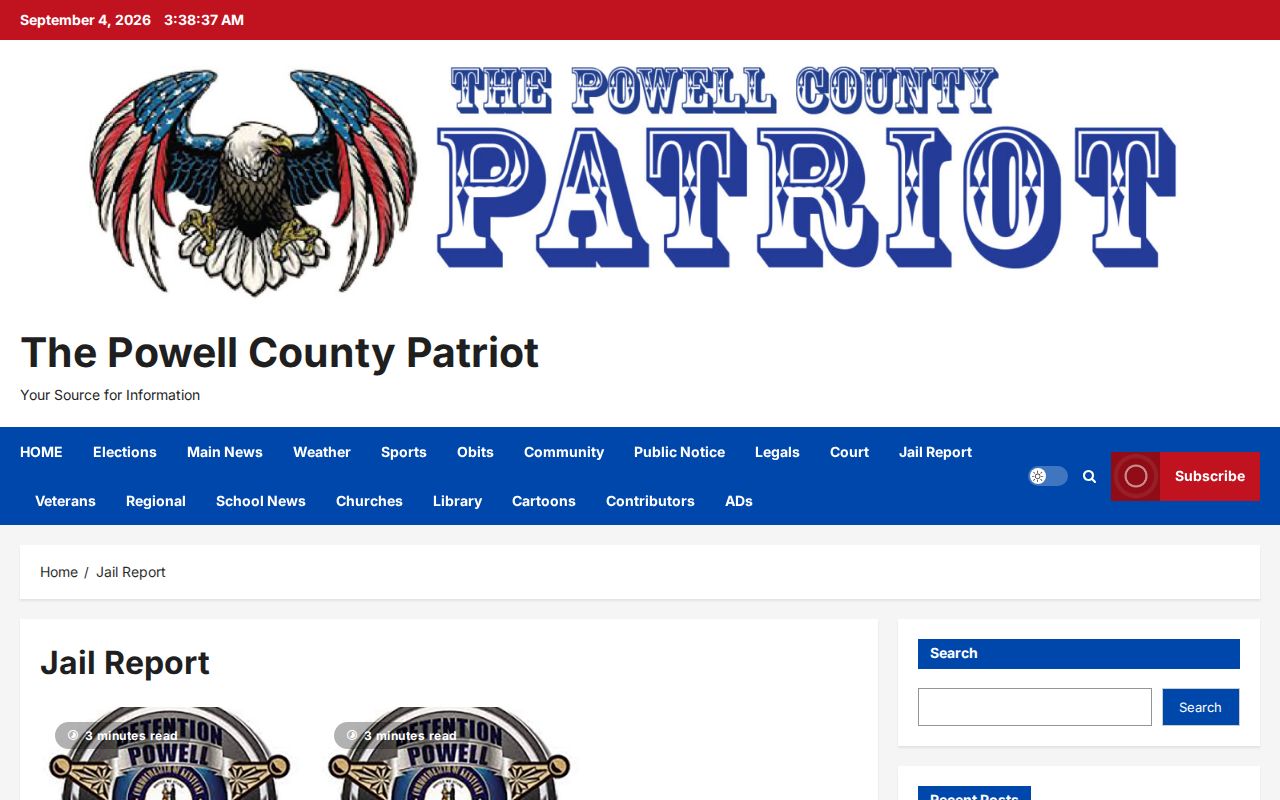
Dated headings make a reporting period easy to find. Verify names, charges, and custody with the office. Regional outlets also run event-driven stories built on agency statements. Those stories add context on one investigation. They never form a standing Powell County arrest log, and a story's publication date is a news date, not an arrest, booking, or disposition date.
Powell Weekend Posting Limits
No official source shows a weekend surge, holiday delay, or weekday posting batch in Powell County. A Monday cluster proves little. It could reflect arrests, publication timing, data collection, or all three. Treat it as noise. Never turn it into a claim about county enforcement or jail workload without official data. Search the full span around a weekend date. Separate four dates: incident, arrest, booking, and publication. A court filing may land later still, and that timeline keeps a news archive from being misread as a count of who was arrested that day.
Unofficial Powell Arrest Archives
Official records come first. Still, several third-party publishers keep Powell-labelled pages that can help you spot a date or an agency. Treat them as secondary leads. Their entries may be copied, mixed across agencies, out of date, or missing the court disposition.
| Source | Observed scope | Use |
|---|---|---|
| RecentlyBooked Powell | A changing last-30-days-style directory | Find a recent lead, then verify officially. |
| Arrests.org Powell | Month and year archive links | Locate historical leads, not current custody. |
| Mugshots.zone Powell | Current-looking entries plus month archives | Check dates and agency labels with caution. |
The RecentlyBooked county section is shown in this captured source view.
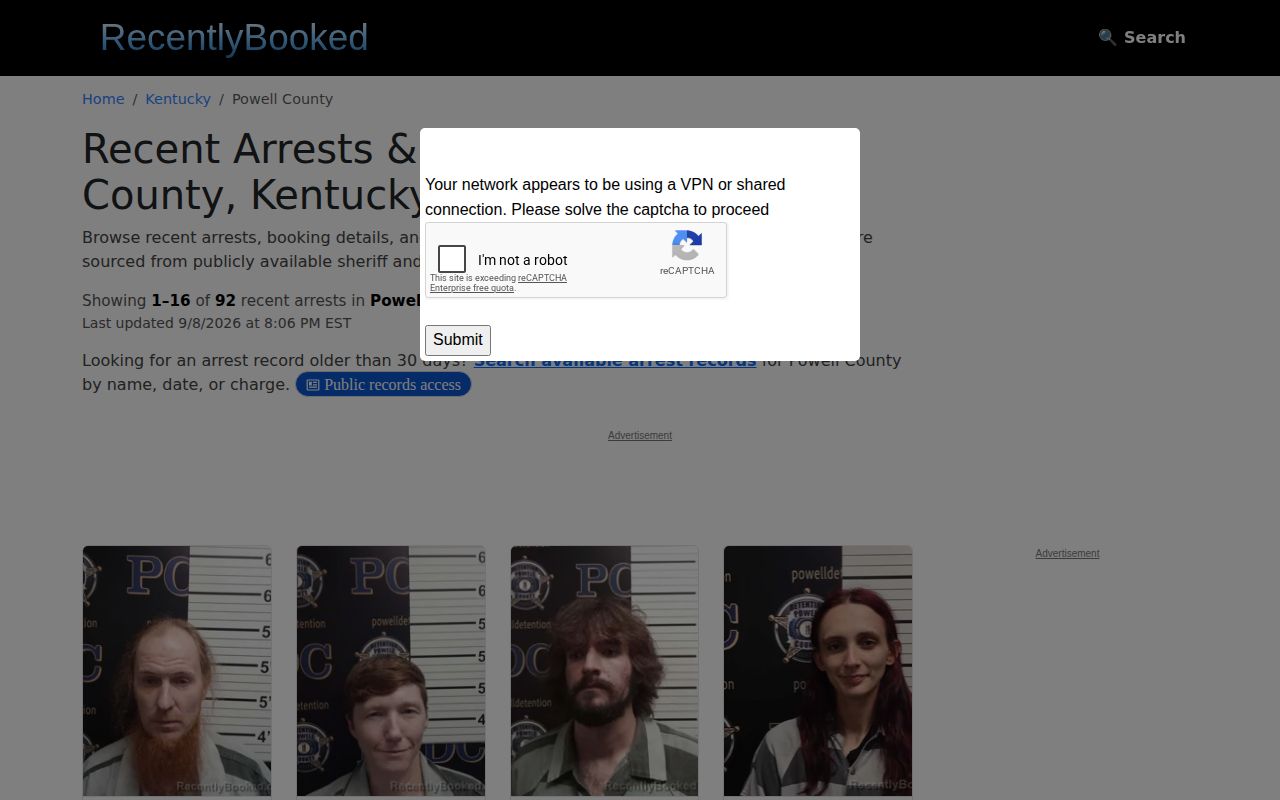
Its rolling window is set by the publisher, not by PCDC retention. The Arrests.org Powell archive shows its month-based organization.
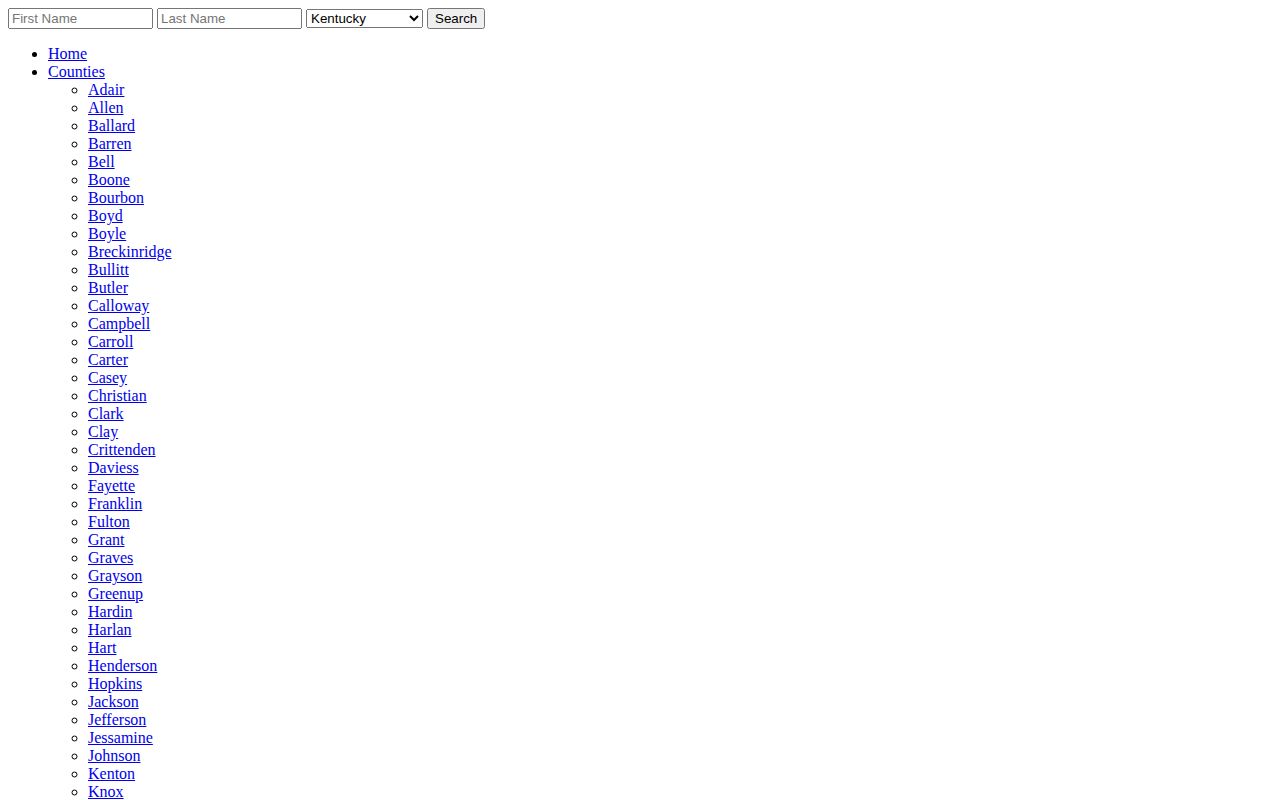
Month folders help with old leads. They never show who remains in the county jail.
Powell Arrest Record Retention
An entry vanishing from a publisher does not mean the government record is gone. The official copy lives on its own schedule. Kentucky sorts these into separate record series. Jail registers and daily arrest lists each follow their own retention rules. So do criminal-history files, fingerprint files, and booking photos. A closed county jail register carries a five-year post-release schedule. Other law-enforcement series run much longer. The daily list may be destroyed once it is no longer needed. None of that promises an online window. Begin with PCDC or the arresting agency. Name the record you want. Ask whether the booking register, daily list, image, or report is still there. Ask whether it was transferred or destroyed under schedule. The Powell County Circuit Court Clerk comes first for a filed case and its outcome. Kentucky's Department for Libraries and Archives may hold historical records. Still, a listed series does not prove KDLA has Powell's specific file. Pair old bookings with court records. A case can end in dismissal, acquittal, plea, conviction, diversion, or another result. Only that later filing tells the story. Note: Publisher archive depth and government retention are separate, and neither proves a person is currently in Powell County custody.
Request Older Powell Arrest Reports
A smart request names the right custodian. Skip the broad fishing trip that asks for everything on a person. Want a Powell County jail booking? Start with the Powell County Detention Center. Use its online FOIA contact form. Stanton Police, Clay City Police, the sheriff, or Kentucky State Police may have handled the incident instead. Send your report request straight to that agency. One event can leave two records: the jail entry and the officer's incident report. Give the full name and a narrow date range. Name the agency you think holds it. Say exactly what you want. That could be the jail register entry, the daily arrest-list entry, a booking photograph, or the incident report. If some material must be redacted, ask for the nonexempt portions. PCDC posts no fee or response time on its form, so assume neither. Court requests work best with a case number, and the disposition must be sought separately. Older historical material is a different errand. The Kentucky Department for Libraries and Archives request path covers research requests and inventories. KDLA lists a four-to-six-week typical response window plus its current research fees. That archive route is not the first stop for a modern Powell booking, though. Ask the local custodian first whether a record transferred before you mail anything to KDLA.